
Living in New Brunswick:
Fredericton : Moncton : Saint John : Immigration : Migrant Population
New Brunswick lies on the Atlantic Coast of Canada and is heavily forested – about 80 percent of the land is covered with woodland inhabited by moose, bears and other wildlife.
Most people who move to New Brunswick find they are welcomed into very friendly communities.
Southern New Brunswick is home to the province’s English speaking communities.
French speaking communities – making up one-third of the people in New Brunswick – lie in the northern part of the province.
New Brunswick is Canada’s only officially bilingual province.
New Brunswick is one of Canada’s smallest provinces – about the same size as Ireland or Scotland or the Czech Republic.
This leaves plenty of space for its 770,000 residents to enjoy the great outdoors and to build their houses.
Who Would Want To Live In New Brunswick?
New Brunswick is an especially attractive immigration destination for downsizers – people who desire a simpler, no-frills lifestyle amidst a land teeming with lakes and forests.
Real estate in New Brunswick is amongst the cheapest in Canada. In May 2020, according to the Canadian Real Estate Association, the average house price in New Brunswick was just $192,000.
Newcomers who have sold more expensive property elsewhere often find they can buy a house mortgage-free in New Brunswick.
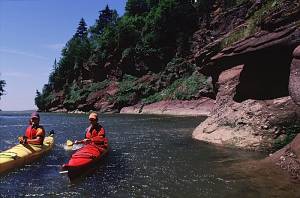
On New Brunswick’s Coast
In New Brunswick you get the chance to own an acreage of land that only the wealthy could afford in some places and the opportunity to live in communities where people still genuinely help one another.
If you are money-oriented and want to find a high-powered, fast moving career path (and a cosmopolitan nightlife with trendy nightclubs and the like) New Brunswick is probably not for you.
Although New Brunswick does not have a dynamic economy, the typical offered average hourly earnings for salaried employees is $16.60 per hour, higher than Prince Edward Island ($15.20) but lower than Newfoundland and Labrador ($20.45).
New Brunswick is currently suffering the effects of the coronavirus pandemic and the Canada Emergency Wage Subsidy has been introduced lasting to August 2020 to help employers retain staff. The unemployment rate has risen from 7.6 percent in January 2020 to 11.6 percent in May 2020, higher than the Canadian average of 11.5 percent.
Who Lives In New Brunswick?
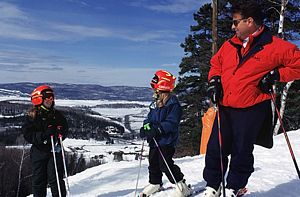
Winter in New Brunswick
Most New Brunswickers have British Isles ancestry (English, Scottish and Irish) or French ancestry.
The province is currently home to a small migrant population. Fewer than 6 percent of New Brunswickers are migrants, a very small proportion compared with Toronto, where almost half of the people are migrants.
New Brunswick’s population has seen fewer changes in its demographics than most other Canadian provinces in recent years.

Workers in New Brunswick are paid about 15 percent less than the Canadian average. People who are keen to pursue high-paying careers tend to move west.
What’s New Brunswick’s Climate Like?

Fall / Autumn in New Brunswick
New Brunswick has a continental climate, which you can find out more about on our climate page for Fredericton.
Where Are The Main Places To Live In New Brunswick?
The three biggest cities in New Brunswick are Saint John, Moncton and Fredericton.
Almost half of New Brunswick’s population lives within the metropolitan areas of these three cities and, for most people, the best opportunities for work can be found here.
The major primary industries in New Brunswick are fishing and timber.
Saint John

Saint John Harbour
Saint John is the most industrial city in New Brunswick and perhaps the least picturesque. Its metropolitan population is about 130,000.
Saint John is New Brunswick’s principal port and manufacturing area. The port is ice-free in winter because of very vigorous tidal currents in the Bay of Fundy.
Saint John has faced difficulties as its older industries – like ship building – have been unable to compete in the world economy and have been closing.
Current industries include brewing, electricity generation, transport / distribution, call centres and the largest oil-refinery in Canada.
Moncton
Suburban Moncton
Moncton’s metropolitan population is about 155,000. It is a lively area with a mixture of English and French (30 percent) speakers and cultures.
Almost all of Moncton’s French speakers are bilingual. A significant number of Moncton’s English speakers do not speak French. It is easy to work in Moncton without speaking French but, if you are in business, it could prove useful.
Moncton is a growing centre for high-tech and service industries – including call-centres drawn by Moncton’s bilingual workforce.
The Université de Moncton – a French speaking university – is based in Moncton and the city is well provided for in terms of shopping, schools and recreation.
Moncton and Halifax (Nova Scotia) are actively promoting a Moncton-Halifax growth corridor to try to enhance their mutual economies along with those of Truro, Amherst and Sackville en-route.
Moncton is home to New Brunswick’s main airport, operating scheduled flights to Halifax, Montreal, Toronto, Hamilton, Calgary, Edmonton and Newark. Seasonal and charter flights operate to France, Germany, Florida, and Caribbean islands.
Fredericton

A Traditional Street in Fredericton
Fredericton’s metropolitan population is about 110,000, depending on student numbers. Fredericton is the capital of New Brunswick and sits, picturesquely, on the St John river.
In addition to government work, Fredericton is a university city, with good shopping facilities, schools, and recreational facilities. Fredericton is the home of two universities – The University of New Brunswick, founded in 1785, and St. Thomas University, a centre for Catholic liberal arts education.
Information technology based businesses are a growing force in Fredericton.
Fredericton’s airport operates internal flights to Toronto, Montreal and Halifax and externally to Boston, Massachusetts.
Which City is Best to Live In?

Confederation Bridge: New Brunswick to Prince
Edward Island. At 12.9 km (8 miles), it’s the
longest bridge over ice-covered water on Earth.
The commonly held view is that Fredericton and Moncton, with less heavy industry, are preferable to Saint John in terms of quality of life.
In mid 2020, the average price of a home in the Fredericton area was $216,000 and the average price in Saint John was $187,000.
How Can I Live In New Brunswick?
To make your home in New Brunswick you need to become a permanent resident of Canada. This is done via the normal immigration processes.
To speed your application up, you might consider New Brunswick’s Provincial Nominee Program (NBPNP).
Applicants are ranked according to an assessment score. The highest ranked candidates may be invited to apply to NBPNP Express Entry Labour Market Stream.
Planning on moving to NB next year. I am a teacher in Ontario. How do I get started? Is there a College of Teachers for NB? Income, housing. Would really like to connect with a teacher who is willing to help with the transition. Thank you very much
Having recently moved to NB from Ontario, I can say from my experience, that it really depends on a few things… your motivation for moving to NB, your personality, and your expectations. It was a shock for me, for a few reasons. Not having done alot of research (which I highly recommend people do), I went on the childhood memories I had of visiting relatives in the summers. Now, it really depends on which part of the province you choose to live, also.
My relatives were in larger cities, in Southern NB. Not all of NB is the same in a few ways. Northern NB, I have found is made up of smaller communities, mainly French speaking. (Bilingual) It’s not 100% and it depends on exactly which city. There are English only people everywhere, but in some cities, you find less than others. DO YOUR RESEARCH.
Having been here 6 months and hearing lots of opinions on this particular issue, I try to have an open mind and I have come to realize that, most people will quickly start to speak English once they realize I don’t speak French at all. If your goal is to work in Gov’t careers (Health Care, Education, etc) chances are you will need to be Bilingual. That may depend on which district you choose to live as well. Do your research, job listings state specifically if it is a requirement.
As far as the reputation NB people have of being friendly, welcoming, caring people, I have found that yes, there are some who appear that way and have a reason behind it, and some are genuinely just that way with no hidden agenda. This is everywhere. I try to understand, rather than judge people… I know that no matter where you go, people are people. I have met people in Ontario who were both ways as well. It seems to be more obvious in NB and I am able to tell the difference more quickly than I could in Ontario. I once told a friend,, it’s like in Ontario, people are the same, we just hide our flaws better, lol…Just my observations, but I have come to think that maybe the reason some people are appearing to be “takers, manipulative, dishonest” is because often they only know how to be this way and it often is because they have experienced poverty, either in childhood, or adulthood or both. It becomes a survival strategy for some.
Is it wrong for a starving child to steal food? I look at it like that. I am a giving person and I have to understand the situation before I give now. Often once we get honest, I find there is a legitimate need. If not, I help by offering alternatives for them to pursue (learning better money management, scaling down to buy the things they need instead of want, etc) People are people. We ALL have the ability to be dishonest and if any of us were put in a poverty situation, we would all do things or consider things we wouldn’t do if we had no money concerns.
People here, in my experience appear to be suspicious of me simply because I moved from Ontario to here. I find I have to explain WHY I moved here often and I still feel like they need time to build trust. That also could be for MANY reasons… From what I have been told, some folks from Ontario, come to NB with their big money and don’t adjust to the “climate” here quickly and can be seen as arrogant. It’s often not true, but there is a big difference growing up in a province that is financially worse off in general, than one that is doing “well” financially. It’s all relative. It depends on my motives for wanting to live here. For me, I wanted a quieter, simpler lifestyle for many reasons. My health was at risk living in a fast paced environment, and I am an introvert so the “noise” of where I grew up was often overwhelming…That is not the case for others. Many people love the excitement of places like Toronto/Ottawa. For me it is too loud/busy. My scenses get overloaded in these places and I find it difficult to rest. In NB, it is much quieter, I have found.
One benefit I have really had, is that EVERY experience I have had in going to a clinic/hospital with others or my children, has been very positive. I have had health care professionals spend extra time an genuine care with myself and my family. That alone was refreshing.
In Ontario, because of the pace and the population, health care feels more hurried, which can add to the patients stress level…. I have often thanked the health care professionals for their genuine care and concern for us. I have seen MANY displays of genuine care from various Health Care Professionals… and I choose to look on the positive..Yes, there were times I felt like running back to Ontario, but I needed to give this lifestyle a chance. I needed to open my mind to the differences and look for the positives. I don’t expect people to understand my ways, but for my health I find NB to be better, once I adjusted to the many changes I didn’t anticipate…
Also,,, a word of advice, look into all the ways how where you are coming from and NB differ. For instance, know about driver’s licence and ownership transfers work. It is quite different in NB. I am told I have to have a sticker in my windshield that shows that my mechanic has inspected my car and finds it “safe”. In Ontario, we did that only when selling a vehicle (get the car “safetied” by a mechanic)…There are different terms for what Ontario calls the G1 (beginners permit) and different permissions for driving without being fully lisenced.
There are different laws/bylaws. Schooling is different. I am told that NB doesn’t have Catholic schools, as Ontario does. There is Public or French. Public often offers both English and French Immersion. The children in French Immersion begin at a different grade level here and Kindergarten isn’t JK and SK, it’s Preschool and Kindergarten. The school day is very different here, in some communities, school gets out at lunch time on Fridays. In some communities, there are seperate schools for Kindergarten to grade 2, then another school for grades 3 to 5, another for grades 6 to 8, etc… You may find the school in your city has Kindergarten all the way to Grade 12 in one building. Ask these questions if these things are important to you, before deciding on a community.
Some communities are suited for the demographics, for example, Oromocto is nick named and “Army town” and there are different opportunities there simply because of the population of Army families, Having said ALL of this,,, I don’t regret moving to NB. The benefits outweigh the negatives, that i have come to see as just differences, not necessarily negative.
I am looking to move to the east coast of Canada from England next summer with my husband becoming a student for 2 years studying Criminal
Justice quite probably in NB. I’m a Vice-Principal of a High School in England (we don’t speak French which worries me). We’ll be coming with our 2 daughters (18 & 12). Would NB be okay with us not speaking French? I’m looking to find work and schools for my daughters too but I’m not sure about the best areas to look at. Any help gratefully received!!!
For the life of me, I do not see why anyone would consider living in New Brunswick or for that matter Nova Scotia. I came from Ontario, and although housing is higher there, everything in the above 2 provinces is far more expensive. Taxes in NB are the highest in Canada for everything you buy, food prices are outrageous, heating if electric will bankrupt you and you will be hard pressed to find a family doctor. I was here only 2 months and put the house back up for sale. A retiree in this province will never make it on a fixed income and that’s with the house paid for. Expect nothing, cause you will get nothing and every single worker I’ve hired to upgrade the house wants cash including contractors, and will rip you off completely. Do your homework on anything you buy, as I have never met honest, decent people yet with any of my business dealings. Culture shock for sure. Cannot speak of the educational system, but if this province can squeeze a dime out of you they will. This place completely disgusts me and was the worst decision I ever made. Young people are leaving the province in droves… and I understand why. An article was written by McLeans that NB will self destruct in 10 years and not only do I agree, but can see it coming. Save yourself the headache and do NOT move here
I totally agree, been vacationing there for 35 years, at the family cottage.
Sold last year and won’t be going back there too often.
The only good jobs are government, or jobs because of the ‘friends or family’ you know.
Only the houses are cheap, all other costs of living are crazy expensive.
And I never agreed with the idea that ‘maritimers are friendly’, they only are if they want something from you, like your tourist dollars.
New Brunswick is a beautiful place to live. My husband and I grew up in/near Fredericton. We both attended UNB. We moved to Ottawa, Ontario after graduation to begin our careers. We returned to NB ten years later with our young family. We wanted our children to know their grandparents and to grow up in a safe community. Neither my husband or I work for the province, though we reside here. Speaking English only is perfectly fine. Gaining employment with the provincial government is impossible without fluent French, but other employment is available. I wish you the very best and hope that you will come to our beautiful province.
Question? Looking for a small acreage and house in NB where I can grow veggies, where the people are friendly, where the cross country skiing is good enough, hiking good, and with some lakes around for swimming. Which area would you recommend? I am content being closer to a smaller town – no need for the big centres. Thanks Linda
Linda,
Sussex is THE place for you! I moved here 2 years ago from Halifax and love it.
I have an offer in my current company in Toronto but in Fredericton office. For the last 2 weeks, I have been searching for information about the city. (1) What would it be like living there for a professional without a car? I learned that buses are few and transit is not available on Sundays. (2) average salary is lower than ON but personal tax will be higher. But would you feel it? I mean with less net salary, in terms of basic needs like food, clothes, etc., would you be able to purchase more? (3) Housing: I am looking of getting a room first and seen some in kijiji. Most of them are post students but what can you say about the condition? Are they reasonable and comfortable to live in? Thank you all for your feedback.
According to you, which city in NB is the best to live in ? I currently live in Toronto and I’m sick and tired of life here. I would greatly appreciate it if someone could give me positive feedbacks about life styles in NB
The smaller cities were not mentioned. The Miramichi is a nice friendly place to live. There is great fishing on the famous Miramichi River. It may not be the best place for shopping but Moncton is less than two hours
Then there is Bathurst, an hour north. It has a nice golf course, The Gowan Brae,, Youghall Beach and a city surrounded by water. The winters can be a bit harsh but if you like X-country skiing, snowshoeing or skating, it’s a nice place to live. You will hear more French in Bathurst than in the south.
I am looking to relocate to a smaller town south of St. John’s.
Easy going, laid back but community activities and a pub is a must.
Any feedback would be so appreciated.
Well st. stephen is a nice small english town that borders the american border and its on the sea!
Is there any trouble there because it’s beside the American border.
Looking forward to live in Moncton, New Brunswick as an immigrant.
When will you be moving here? I was born n raised by the beaches. Which most ppl know of and is just east beside downtown Toronto and has the public beaches and the boardwalk. My mom’s side of the family lives in Fredericton. So we grew up in an amazing city, but went for 2 months a summer to stay with our grandparents. What an awesome life to experience, 10 months in the crazy busy large downtown area’s and then Noonon which is a out in the sticks. They were really poor..no running water, only outhouses n farm animals right out the back door. My grandfather hauled garbage to the dump and in reality a LOT of it that was really cool was on the property. BEST summer’s of my life growing up!!
So I grew up between Toronto and New Brunswick. I moved to New Brunswick when I was younger going into grade 4 and I stayed here till I graduated in grade 12 and while I was living here I did the reverse of living here 10 months and then going back to downtown Toronto for 2 months of the year with my dad’s family.
Laying out that information makes it so much easier for me personally to be able to speak about living in the downtown Toronto area and also living in New Brunswick. I’ve seen The Best of Both Worlds in regards to seeing large and small communities.
Currently I live in Moncton and I live a very social life. I have a lot of English-speaking friends, i have a lot of french-speaking friends, and of course there’s always the bilingualism that’s constant. I’m personally English but I have picked up on a lot of french where I can understand most of the conversations but I don’t speak it at all. I’ve worked in federal government provincial government the private sector businesses also in the health industry and law enforcement. You can have an awsome life living in Moncton New Brunswick. If you really want to and actually go for it you could probably find just about any job that you want. And although I am 50 years old now, I have always maintained an active living, I still go to bust a Groove at some of the clubs in Moncton, there’s also a lot of pubs that have a variety of different bands that play and some of them are like really top-of-the-line, and then they have like general pubs were people just kind of go have drinks and a meal and there’s music in the background but Moncton as a whole has a ton ton of restaurants of any variety you can think of. You can get your free education now that that’s been made law. There’s two universities in Moncton one French 1 English, there’s also two community colleges one French one English. And they hold a variety of courses especially 2-year courses in certain industries such as engineering that you cram a four-year Bachelor into those two years and you graduate with more courses then going to a university. Not to mention that in these community colleges you get a wealth of hands-on experience and the theoretical experience which makes it perfect for you to come out and have just about any job. Of course there are some companies that want you to be able to speak both English and French which is bilingualism, but if you search for specific jobs you can usually find them in your mother tongue. The ability to own your own house is relatively simple and is one of the most cheapest places to live in Canada. A lot of people still choose to rent which is roughly maybe about $800 for a two bedroom but you can definitely get it cheaper and you can definitely upscale it. I personally don’t know why someone would want to spend $800 a month on rent when they can buy a really nice house and have a mortgage of $800 which is crazy because most mortgages run about 5 to $600 a month.
So I believe anybody moving to Moncton truly is moving to a better Community standard of living. It’s large enough with a 150,000 people and truly when you go to the store you always talk to people, it’s always super nice and if you go you shopping everyone says hi, they will the doors open for you it’s unbelievable. And you will find people that you enjoy hanging out with that might be 20 years old and then other people who might be 60 years old, I personally have friends in the entire range of Ages.
So you asked about Moncton? Moncton it’s: very easy to either own your vehicle out right or buy second-hand or brand new.. lots of truck’s, SUV’s, 4×4’s, off roading and fancy cars. You can have amazing time’s in the woods (which takes about 15 mins from all sides of the city to drive to) on four-wheelers, boating, canoeing, camping, hanging out and house parties, garage parties, deck parties, and there’s lots of golfing and there’s the event centers there’s the the call up junior hockey League’s to the NHL!! It’s an AWESOME general community in a City. Period!!… Don’t listen to the naysayers or people that go strictly right to a complain. If you hear people talking about two negative things in one conversation well you just don’t need to bother listening to the rest of it cuz they ain’t doing anything good!!
You can message me if you want any more information I’d be glad to help you out.
Wow Patti, that was an amazing sum-up. I just about may give it a thought when I have to hang up my boots.
Thank-you very much for the info Patti, it was refreshing to hear it from someone who actually knows about the area. I’ve heard it wasn’t the greatest from dissatisfied people who moved there,, but didn’t believe them.. My husband and I want a different lifestyle and N.B. seems to be the place to be, friendly and affordable. I’ve found a little farm in the country and hope to be there within the year. Again, thanks for the info!
Hi my husband 3 kids aged 5 6 and 8 are thinking to move there so we could be closer to friends and mortgage free coming from Ontario . We own a masonry company here and would think our relocation but I’m worried after all the negative comments and what if we don’t find work. My father is from New Brunswick but also lives here in Ontario. Our boys play hockey and we visited last summer and it’s beautiful ! I’m wondering would this be a bad decision if the cost of living is high like people are saying . Your feedback would be greatly appreciated .
You need to know your reasons for your family. It sounds like you do. Many people come here and live mortgage free. Many homes can be bought on a lot of 10 acres for example, for under 100,000. Not the case where I came from. I live in NB now, moved here 6 months ago. It is a big change, but the benefits outweigh any challenges. Some people exaggerate things. Do your research. Compare apples to apples as they say.
Rent where I am from starts at 1300/month plus hydro for a 2 bdrm for example… Here the same thing is 500 plus hydro. Hydro may cost more here, but if your home is heated by electricity, of course the Hydro bill is going to be higher,,, but you wont be getting a Gas Bill, like where I came from. Heating is quite different here.. Many homes have wall mounted heating and cooling systems. or electric heat. Central air conditioning is rare. Where i am from, the common heating/cooling is Gas powered furnaces or oil… not the case in NB, commonly. The extra I pay in hydro makes sense when I dont’ recieve a hydro plus a gas bill….Weather here is quite different.
There is alot more snow here than where I come from, but many people enjoy snow. It really all depends on what you are looking for. Many people are finding that scaling down/minimising has benefits to the familys health and well being, especially if it means they can be closer to family.
With hockey, there are some towns that are more into Competitive hockey than other towns. Most towns have hockey, this is very much a hockey loving province. Do your research.
It took me a while to adjust to all the changes, but overall, it is a benefit to my family to be here.
Hello Patti,
Thanks for sharing about NB drawing from your life. I am indeed interested in moving to NB with my family. I am based out of Greater Toronto Area.
Another thank you, Patti.
I am moving from the rat race crazy life in Vancouver to NB this spring. I was born In Campbellton and still have family there as well as Moncton. I am heading to NB in mid-March to house hunt. Gonna look east of Moncton and also around the Saint John Area. I have realtors from each location helping me out. After reading some of the previous negative comments I had a pit in my stomach. After reading your perspective I feel better. I am so much wanting to go back to basics. My own garden, learn how to preserve veggies for the winter, and even hang washed clothes on a clothes line. Planning on lots of cycle touring in the Maritimes and NE states. Family visits more often too:)
I hope the cost of living isn’t as bad as folks are saying here. I will definitely have a wood stove for winter heating.
Sure hope I’m not making a mistake as there is no turning back for me!
Thanks again for a positive perspective.
Steve
Can someone living on a pension afford to live there?
looking for the same answer to that question (living on a pension —
Is New Brunswick Handicap Accessible? Can you find accessible housing? Are there good hospitals/neurologists there?
what about language, my wife is as medical professional, ultrasound, would she have to speak french in a hospital setting?
It’s bilingual with English and French. French is an asset but most people speak English there anyway.
so you have to speak french thats the question he wants answered. Actually NB lost probably 400000 people due to a slow economy and french needs to be spoken and written in many of the best jobs so all the educated english folk had to leave! English are 60 percent of NB, French are 40 percent. This is where minority rights are more than the majority where all this bs started and why I had to leave st john 6 times since my 20s!! the strange thing is french people have poor english and are not even tested.
And what about the weather? What part of Nb has the best/worst weather for snowfall, hurricanes and other atlantic ‘desease’?
Saint John and Any of the southern coastal towns along the Bay Of Fundy have the best weather! Moncton gets a lot of snow!
I disagree, Fundy coast towns especially Saint John are always foggy, raining and dreary. I prefer the higher amounts of snow in the winter and the higher temps in the summer along the eastern coastline, New Brunswick’s “Muskoka” cottage country.